
Does a Full Moon Ruin the Northern Lights?
No. The moon has no effect on the aurora itself, which is driven by the sun rather than by anything in Earth's neighbourhood. What a full moon does is raise the background brightness of the sky, which makes faint displays harder to pick out.
For a moderate or strong display, the difference is marginal. For a weak one it can be the difference between noticing it and not.
Set against cloud cover and geomagnetic activity, moon phase is the third or fourth most important variable on any night. Plenty of the best aurora photographs from Iceland were taken under a bright moon.
What the Moon Actually Changes
Three things, and two of them are helpful.
It lifts sky brightness. A full moon turns the background from black to a deep blue-grey, which reduces contrast against a faint green arc.
It lights the landscape. Mountains, snow and water all become visible instead of silhouetted, which most photographers welcome.
It shifts the colour of the sky in photographs. Moonlight is reflected sunlight, so a long exposure under a full moon renders the sky blue rather than black, which many people prefer.
What it does not do is change the aurora's brightness, colour or frequency by any amount at all.
When It Genuinely Matters
Two situations where the moon is worth planning around.
If you are chasing very faint displays, a dark sky helps. On a quiet night with activity at 1 or 2, a full moon can push a marginal band below what your eyes will pick out.
If you are doing serious astrophotography and want stars alongside the aurora, moonlight washes out the fainter ones. A new moon gives a cleaner star field.
Outside those two cases, the moon rarely decides anything. If a strong display arrives, you will see it under any moon.
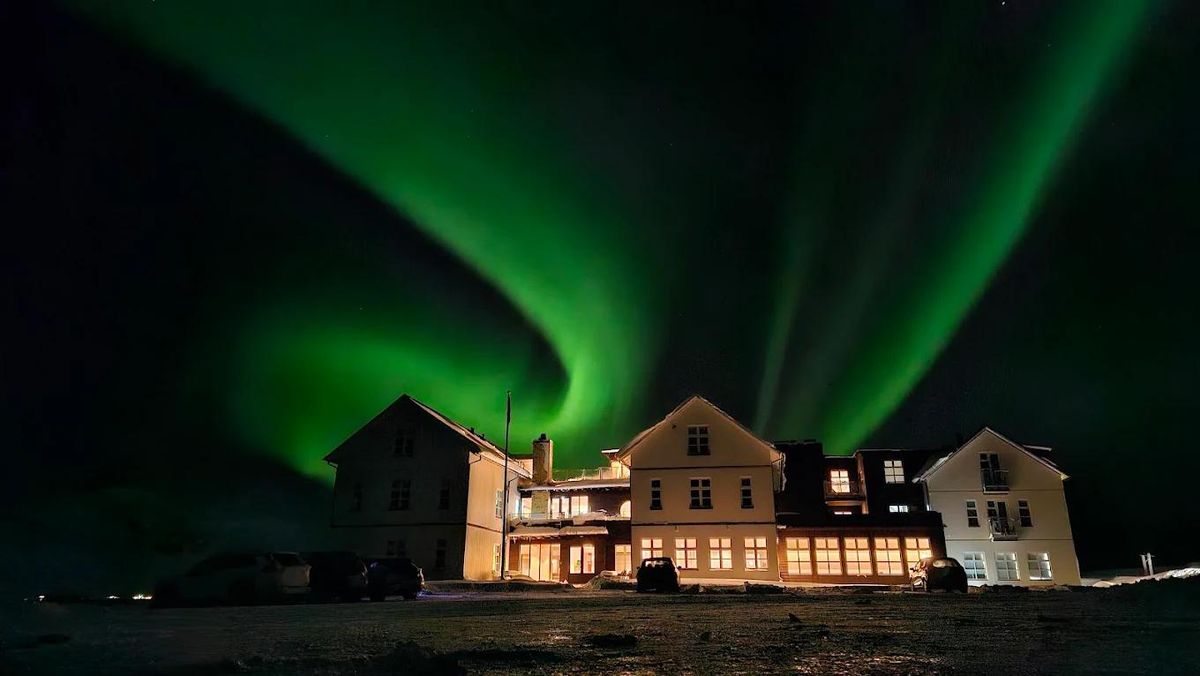
Moonlight makes the landscape visible, which is why some photographers prefer it to a completely dark night.
Moonrise and Moonset Beat Moon Phase
This is the point most guides miss, and it is the practical one.
The moon is not up all night. Its rise and set times shift by roughly 50 minutes each day, so on many nights a bright moon sets before the best aurora window or rises after it.
That means a night with a nearly full moon can be completely moonless between 10pm and 1am, which is exactly the window when displays peak.
The Icelandic Met Office aurora forecast publishes moonrise and moonset alongside sunset, darkness and sunrise times for Reykjavík, on the same page as the activity number and the cloud map. Check those times rather than the phase.
A useful pattern: around first quarter, the moon sets in the late evening, leaving the small hours dark. Around last quarter, it rises after midnight, leaving the early night dark.
How Much Light a Full Moon Adds
Some scale helps here.
A full moon is roughly 400,000 times dimmer than the sun and still bright enough to read large print by. It is the brightest natural object in a night sky by a wide margin.
Compared with a moderate aurora, a full moon is roughly comparable in surface brightness. That is why the two coexist visually rather than one erasing the other.
Compared with a faint aurora, the moon wins. A pale grey arc at activity 1 or 2 is genuinely harder to spot when the whole sky is lit.
Compared with a strong display, the moon is irrelevant. A Kp 4 or 5 night in Iceland fills the sky with movement that nothing on the ground or in orbit is going to hide.
Moonlight and Photography
Photographers split on this, and both sides have a point.
Moonlight gives you a foreground. Mountains, a church, snow-covered ground or a lake all become properly exposed, and a landscape with aurora above it is usually a better photograph than aurora alone.
It also lets you use a lower ISO. With the ground lit, you can expose for the sky and still recover detail below, which produces a cleaner file.
The cost is subtlety. Faint reds and purples that a camera would record on a dark night can disappear into the moonlit sky, and the star field thins out noticeably.
If you have several nights, shoot one under moonlight for the landscape and one under a dark sky for the display. Our Northern Lights camera settings guide covers exposure choices for both.
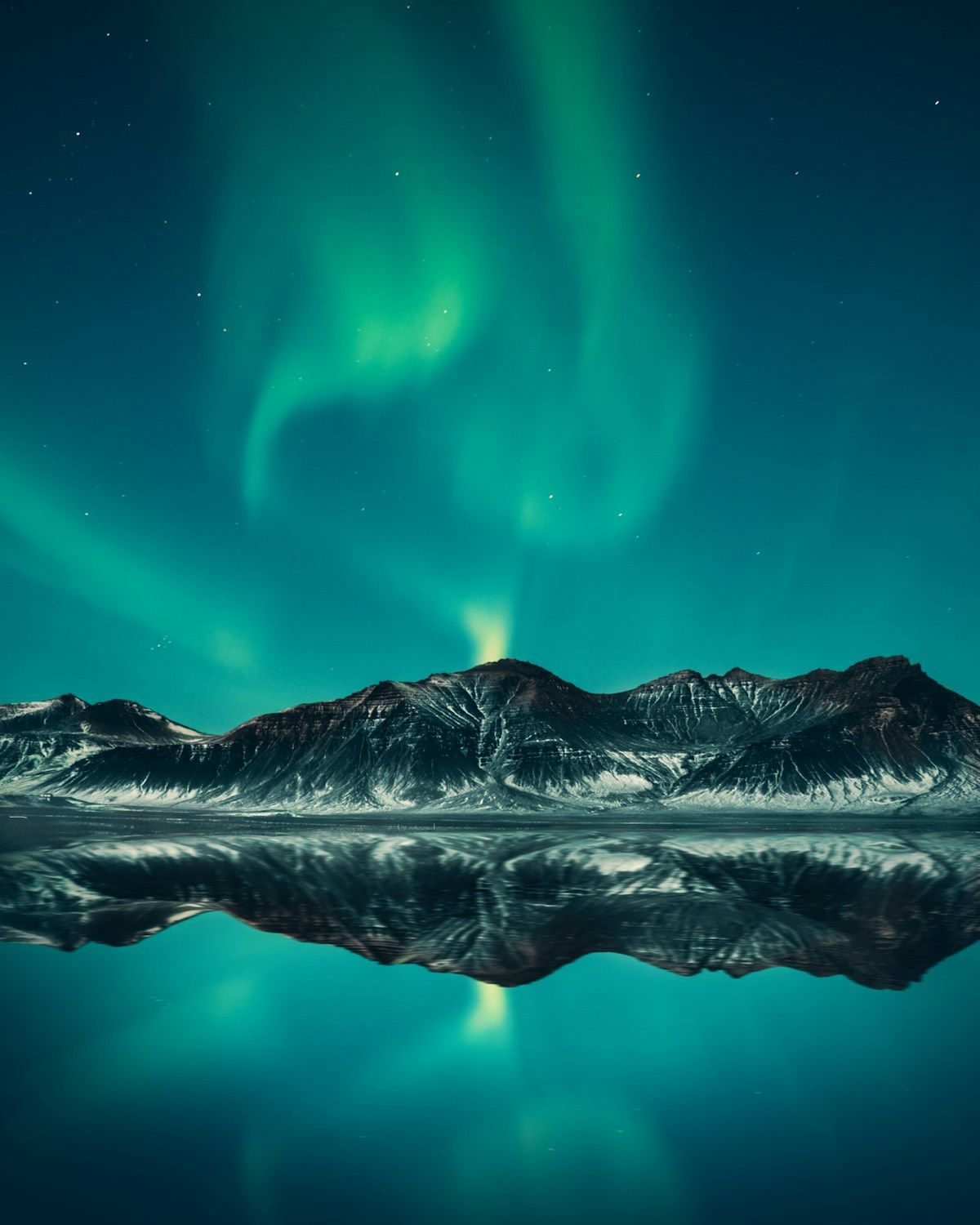
With a lit foreground, the picture becomes a landscape rather than a green sky, which many photographers prefer.
What Matters More Than the Moon
Rank the variables honestly, and the moon comes fourth.
Cloud is first, by a wide margin. Aurora forms at 90 to 150 kilometres up, and cloud sits at 1 to 8, so an overcast sky ends the night regardless of anything else.
Darkness is second. Between mid-May and early August, Iceland has no properly dark sky, so no moon phase saves a June trip.
Activity is third. Iceland sits under the auroral oval, so 2 or 3 on the 0 to 9 scale is enough, and NOAA's storm scale shows that a Kp 5 minor storm, which pushes aurora as far south as northern Michigan, is not something Iceland needs.
The moon is fourth, and light pollution from towns is a close fifth. Getting 20 kilometres out of Reykjavík does more for your night than any lunar calendar.
Should You Plan a Trip Around the Moon Phase?
Only if Aurora is the sole purpose of the visit and your dates are genuinely flexible.
If you can pick any week, choose one around a new moon. It costs nothing, and it marginally improves the faint end of the scale.
If you are choosing between a new-moon week with poor weather and a full-moon week with clear skies, take the clear skies without hesitating.
If your dates are fixed by flights, work or school holidays, ignore the moon entirely. You will do far better by staying three or more nights and getting out of the city than by worrying about lunar phase.
Watching Under a Bright Moon
A few adjustments help on a moonlit night.
Stand with the moon behind you and look at the opposite part of the sky. Contrast is much better away from the moon's glare.
Give your eyes the full 20 minutes to adapt anyway. Dark adaptation still works under moonlight; it just tops out lower.
Use the landscape. A moonlit night is the best one for photographing the aurora over the Þingvellir rift or a still lake, so pick a spot with something to look at rather than an empty field.
Wear the same clothing you would on any aurora night. At the Golden Circle's nearest station, Met Office climate data puts January's average daily low at 4.3°C below zero with mean wind above 5 metres per second, and the moon does nothing about that.
Where to Go on a Moonlit Night
The choice shifts slightly when the ground is lit.
Þingvellir National Park becomes more interesting because the rift walls and the lake are visible rather than black. It is 45 minutes from Reykjavík, and the car parks stay open around the clock.
Anywhere with water is worth more than usual, since moonlight on a still lake doubles both the display and the landscape.
Snow-covered ground amplifies moonlight considerably, which is a mixed blessing. It looks superb, and it raises the ambient brightness further.
Avoid spots where the moon sits in the part of the sky you want to photograph. Check which direction it will be in before you drive.
The Verdict
A full moon is a minor inconvenience for faint aurora and an asset for photographs. It is not a reason to cancel a night, change a booking or reschedule a trip.
The people who miss displays are almost never the ones who went out under a full moon. They are the ones who stayed in because the forecast number looked low or who gave up after 20 minutes.
Go out. Check the cloud map, drive to the clear patch, wait two hours, and let the moon do what it does.
Book a Night Under Any Moon
The variable worth outsourcing is cloud rather than moonlight, and that is the one a guide can actually do something about. Our small-group Northern Lights adventure runs on any moon phase and drives to whichever part of the southwest is clearest that night.
Book it early in your stay so a repeat is possible, and do not let a lunar calendar choose your dates for you.
Compare Golden Circle Tours
Check each selected product for its current operator, guide, itinerary, meeting point, and terms.
View Our Tours

